
How to Prevent Streetwear from Pilling After Washing
Table of Contents
- Why Streetwear Pilling Happens (And What's Actually Going On)
- Prep Steps That Prevent Streetwear Pilling Before You Even Start the Wash
- How to Wash Heavyweight Cotton Without Damaging the Fibers
- Air Drying vs Machine Drying Streetwear: Which One Wins
- How to Remove Pilling from Hoodies That Already Have It
- Post-Wash Maintenance Tools That Extend Garment Life
- Frequently Asked Questions
Last Updated: September 1, 2026
Why Streetwear Pilling Happens (And What's Actually Going On)
Pilling is frustrating when it happens to pieces you care about. You wash a hoodie twice and suddenly the chest has that fuzzy, knotted texture. Understanding why pilling happens is the first step toward stopping it: friction causes loose fibers to break, tangle, and knot on the fabric surface.
Friction, Agitation, and Fiber Breakage
Pilling is the formation of small fiber knots on a fabric surface, caused by repeated abrasion that breaks individual fibers loose from the yarn structure. Once those fibers break free, they tangle with neighboring fibers, accumulate lint, and form visible pills on the chest, underarms, and cuffs.
The washing machine is the primary culprit. Every wash cycle creates agitation: garments tumble, rub against each other, and grind against the drum. High-speed spin cycles accelerate fiber shedding by pushing garments against the drum wall with significant pressure.
Why Heavyweight Cotton and Cotton Blends Are Prone to Pilling
Cotton fibers are shorter than polyester fibers, meaning more fiber ends per unit of fabric and more potential breakage points under agitation. Heavyweight cotton like the 360 GSM, 400 GSM, and 420 GSM fleece used in quality hoodies is dense and durable, but density doesn't eliminate surface friction. Cotton blends incorporating polyester can pill more aggressively because the two fiber types have different elasticity, increasing internal friction during washing.
The right washing approach dramatically slows this process. According to textile care guidance from the American Cleaning Institute, proper garment preparation before washing is one of the most effective ways to extend textile longevity.
Prep Steps That Prevent Streetwear Pilling Before You Even Start the Wash
Most pilling damage happens before the wash cycle finishes its first minute. The prep work you do beforehand determines how much friction your garments experience.
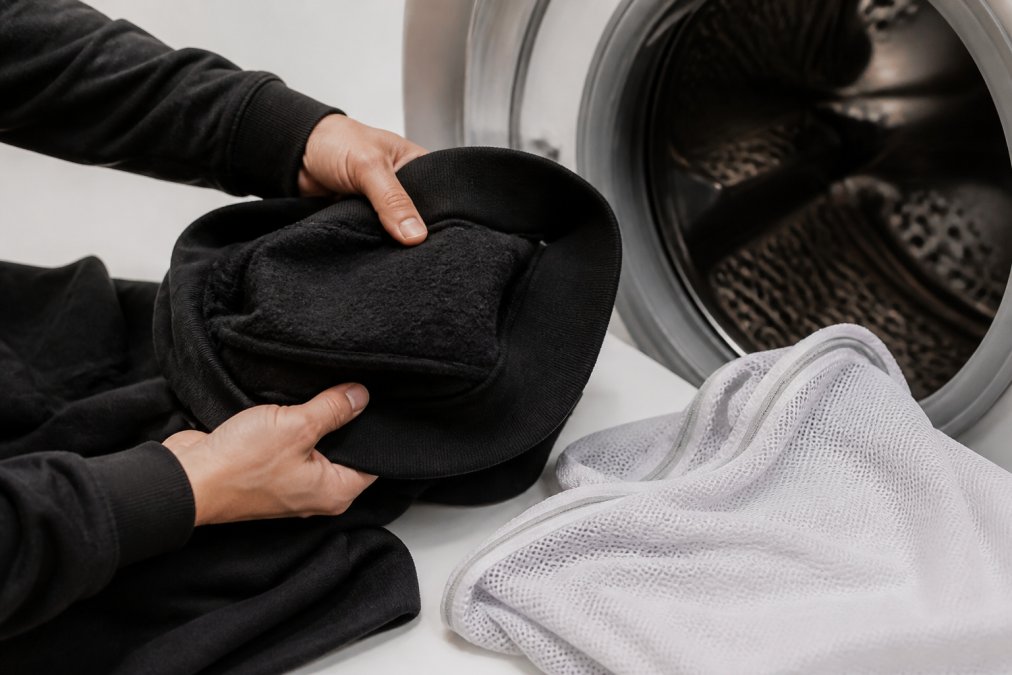
Turn Garments Inside Out
Turning garments inside out is the single most impactful step to prevent pilling. It moves the exterior surface away from direct contact with the drum and other garments. For graphic tees and printed hoodies, this protects both the fabric surface and the print from mechanical stress.
Sort Laundry by Fabric Type and Weight
Washing a 420 GSM hoodie alongside a thin polyester shirt creates friction mismatch. The heavier garment acts like sandpaper against lighter fabrics. Wash heavyweight cotton with other heavyweight cotton, keep delicates separate, and keep synthetics separate to reduce fiber entanglement and lint transfer.
Use Laundry Mesh Bags for Delicates and Graphic Tees
Laundry mesh bags create a physical barrier between garments and the drum. For tees, lighter sweatshirts, and pieces with embroidery or distressed detailing, mesh bags absorb friction instead of the garment surface and reduce fiber shedding into the wash water.
How to Wash Heavyweight Cotton Without Damaging the Fibers
Washing heavyweight cotton correctly comes down to three variables: detergent chemistry, water temperature, and load size.
Choosing the Right Detergent and Avoiding Fabric Softeners
For cotton streetwear, a mild detergent with a balanced enzyme profile is the right choice. Harsh detergents with high alkalinity weaken cotton fiber structure over time, accelerating breakage that causes pilling.
Fabric softener traps lint and surface fuzz rather than releasing it. Over multiple washes, fabric softener buildup creates conditions that make pilling worse. Skip it entirely for heavyweight cotton. As documented in fiber care research from the Textile Research Journal, repeated use of fabric softeners on cotton fabrics measurably reduces fiber integrity over time.
Water Temperature and Wash Cycle Selection
Cold water wash is the correct default for streetwear. Hot water causes cotton fibers to swell and contract rapidly, weakening yarn structure and increasing fiber breakage. The delicate cycle is the right choice for most streetwear, reducing agitation intensity and shortening wash cycle duration to minimize friction exposure.
For DAU-SON's Snow Wash Hoodie, crafted from 420 GSM cotton, the care label specifies a gentle cycle at 30°C for exactly this reason.
Reducing Load Size to Cut Down on Agitation
Overloading the washer is one of the most damaging mistakes in garment care. A full drum means garments compress against each other and the drum wall throughout the cycle, dramatically increasing friction. Wash load capacity should be no more than three-quarters full. For heavyweight hoodies, washing one or two pieces at a time with a few lighter items is ideal.
Air Drying vs Machine Drying Streetwear: Which One Wins
Air drying wins. Tumble dry cycles subject garments to heat and continued mechanical agitation after washing. The heat causes cotton fibers to shrink and weaken. Air drying preserves fiber structure, maintains original dimensions, and extends the life of special finishes.
For individually finished washes like vintage or monkey wash, air drying is especially important. Heat can alter texture and appearance over time. If you must use a machine dryer, tumble dry low only, removing the garment while still slightly damp to finish flat or on a hanger.
The consumer textile care guidelines from the Federal Trade Commission require accurate care labels on all garments sold in the United States. For heavyweight streetwear, air drying is consistently the safer choice.
| Method | Effect on Cotton Fibers | Effect on Washes and Finishes | Recommended? |
|---|---|---|---|
| Air dry flat | Preserves fiber length, minimal stress | Maintains finish texture | Yes, preferred |
| Air dry on hanger | Low stress, slight stretch risk for heavy pieces | Good for most finishes | Yes, acceptable |
| Tumble dry low | Mild heat stress, some agitation | Minor effect on finishes | Use only when needed |
| Tumble dry high | Significant fiber weakening | Can alter vintage/acid washes | No, avoid |
How to Remove Pilling from Hoodies That Already Have It
If your hoodie already has pilling, a fabric shaver is the answer. This handheld tool uses a rotating blade behind protective mesh to shave pills cleanly off the fabric surface without cutting underlying fibers.
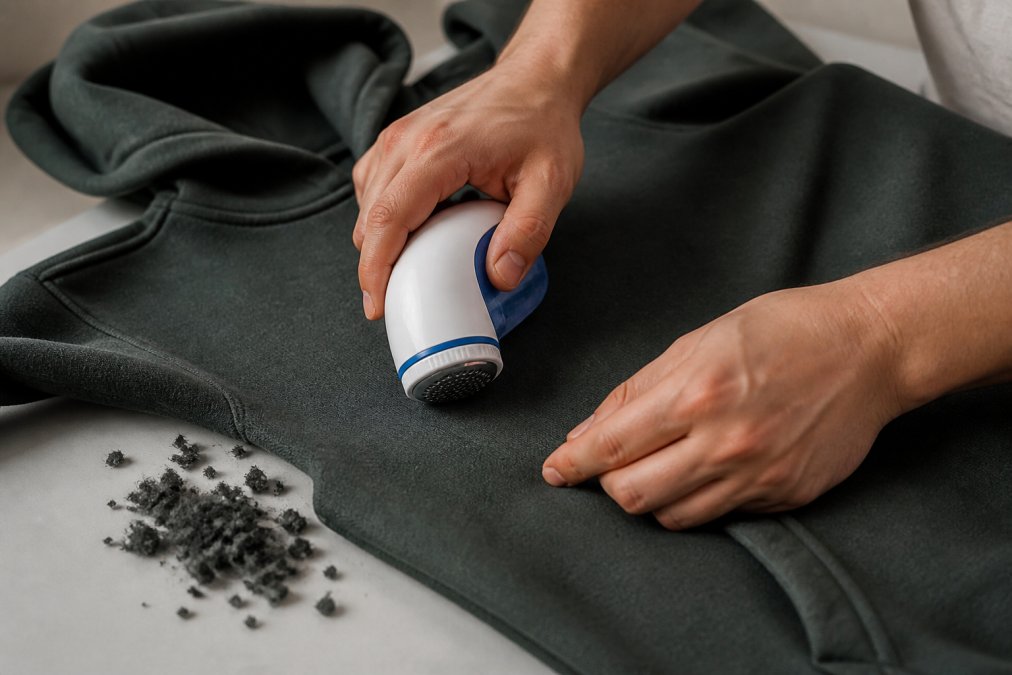
Lay the garment flat on a firm surface and work in slow, circular motions with light pressure. Pressing too hard can catch the base fabric and create thin spots. Empty the collection chamber regularly so the blade doesn't clog.
A fabric shaver will not reverse deep fiber damage, but it restores surface appearance significantly. For lightly pilled hoodies after a few washes, a single pass can make it look close to new. Cheap shavers with weak motors create more damage than they fix. Invest in a model with a strong motor and replaceable blade.
Post-Wash Maintenance Tools That Extend Garment Life
A lint roller handles surface fuzz and loose fibers before they tangle and form pills. Running one over your hoodie after each wear removes loose fiber ends that agitation would turn into pills on the next wash. It takes thirty seconds and meaningfully extends the time between fabric shaver treatments.
A garment steamer relaxes compressed fibers, removes wrinkles without heat stress, and refreshes pieces between washes. For a hoodie worn once but not needing a full wash, a quick steam often suffices.
Storage matters significantly. Fold heavyweight hoodies rather than hanging them to prevent shoulder distortion that stresses fabric at seams. Store away from direct sunlight, which degrades cotton fiber and fades individually finished washes faster than normal wear.
| Tool | Purpose | Frequency of Use |
|---|---|---|
| Lint roller | Remove surface fuzz before it pills | After each wear |
| Fabric shaver | Remove existing pills | As needed, every few washes |
| Garment steamer | Refresh between washes, relax fibers | Between washes as needed |
| Mesh laundry bag | Reduce friction during washing | Every wash for tees and lighter pieces |
The goal is simple: reduce total friction your garment experiences over its lifetime. Every wash cycle, tumble dry session, and rough surface contact adds up. Pieces that last are handled with intention.
Keeping heavyweight streetwear looking clean and pill-free over years of regular wear is achievable with the right habits. DAU-SON designs hoodies and tees built for repeat wear, with heavyweight fabrics and individually finished washes that hold up over time. The Vintage Wash Splatter Hoodie, the Sunfade Hoodie, and the Snow Wash Hoodie are built to last, but they need the right care to get there. Shop The Drop and invest in pieces worth protecting.


Frequently Asked Questions
Why is my 100% cotton streetwear pilling?
Pure cotton fibers break down under friction and agitation during washing. Shorter cotton fibers, common in budget blends, tangle and knot into pills faster than longer-staple cotton. Heavyweight cotton pieces like 360-420 GSM hoodies are especially vulnerable if washed on aggressive cycles or dried on high heat. Turning garments inside out, using a cold water wash on a delicate cycle, and reducing load size all cut down on the fiber breakage that causes pilling.
Does pilling mean poor quality?
Not necessarily. Even premium heavyweight cotton can pill when washed incorrectly. Pilling is caused by friction and agitation, not just fiber quality. That said, garments made from longer-staple cotton or tighter weave constructions resist pilling longer under normal wash conditions. Following the garment care label instructions, avoiding fabric softeners, and air drying instead of tumble drying will preserve even high-quality streetwear significantly longer.
Can you fix pilling once it has already started?
Yes. A fabric shaver removes surface pills cleanly without damaging the underlying fabric. Run it gently over the affected area in short, even strokes. For hoodies with frayed or textured finishes, work carefully around any intentional distressing. After depilling, adjust your wash routine to prevent new pills from forming: use a mesh laundry bag, switch to a gentle or delicate cycle, and air dry flat rather than tumble drying.
How does the wash cycle affect fabric pilling?
Longer, more aggressive cycles increase the total agitation time fabric endures, which accelerates fiber entanglement and surface fuzz. A standard or heavy-duty cycle can expose a hoodie to significantly more mechanical stress than a delicate or gentle cycle. For heavyweight cotton streetwear, the delicate cycle with cold water is the safest option. Shorter wash cycle duration combined with reduced spin speed keeps friction low and extends textile longevity wash after wash.
This article was written using GrandRanker